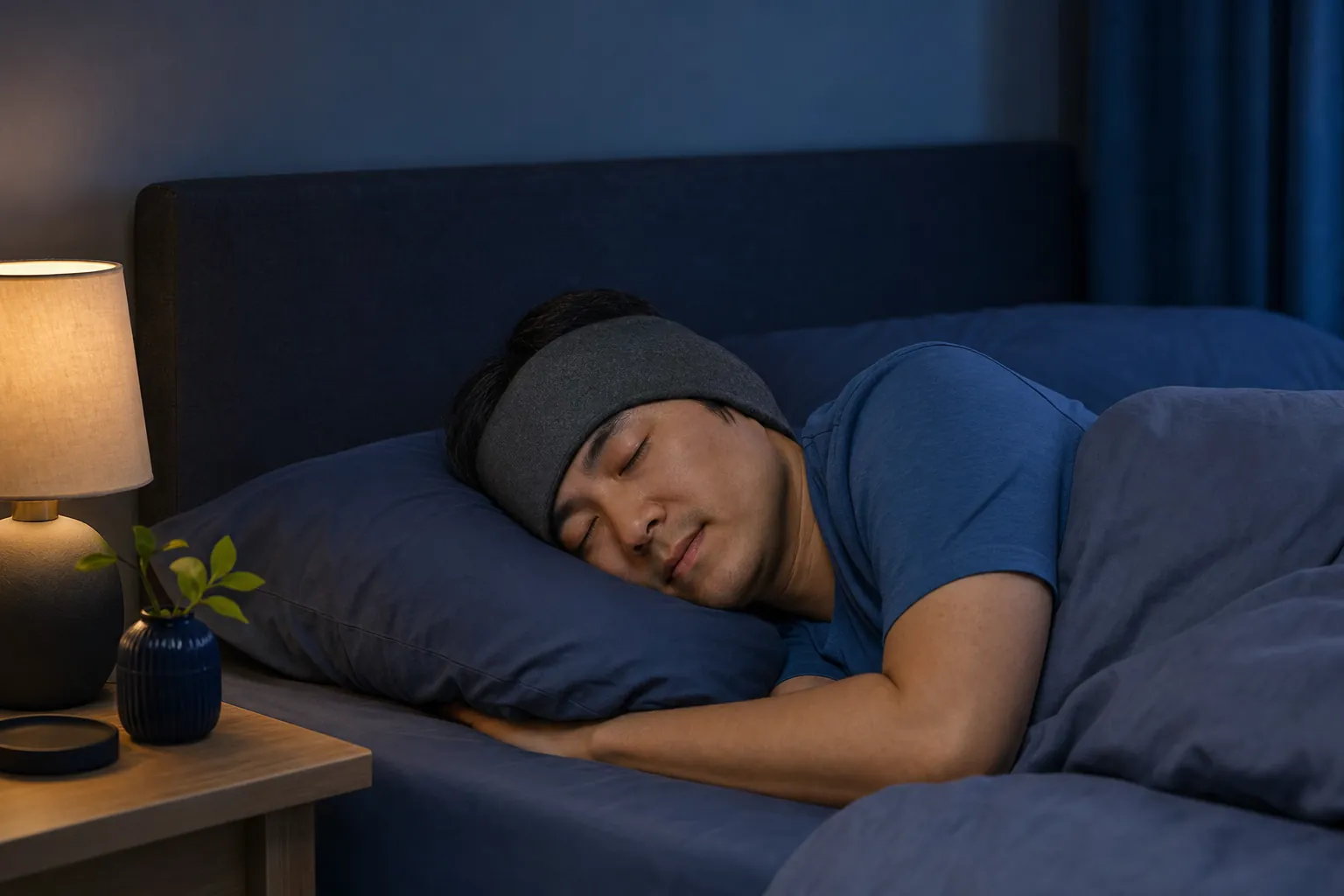
SLEEP AUDIO
Sleep Headphones for Side Sleepers: What to Choose
A side-sleeper setup has one non-negotiable: the headphones cannot become the thing you feel most when your head meets the pillow.

Side sleeping makes ordinary headphones much less forgiving. A pair that sounds great at a desk can feel bulky the moment an ear cup meets a pillow. Even a small earbud can become distracting if the pillow presses it into the ear. The right choice is less about finding the biggest sound and more about finding a shape you can stop noticing.
That usually means choosing between three formats: a soft fabric sleep headband, a low-profile earbud, or a traditional over-ear pair for times when you are not fully lying down. Each solves a different problem. This guide walks through the tradeoffs so you can choose the format that fits your sleeping position, your room, and the kind of audio you actually use at night.
Think of bedtime audio as a small part of a wind-down routine, not a replacement for a comfortable room or consistent sleep habits. The National Heart, Lung, and Blood Institute recommends a sleep space that is quiet, dark, cool, and comfortable, which is useful context before adding any device to the pillow. Its healthy sleep habits guidance is a practical starting point.
Start with pressure, not sound quality
For a side sleeper, the pressure point is where the ear, the headphone, and the pillow meet. When that spot is uncomfortable, excellent battery life, extra bass, and a long feature list will not rescue the purchase. The first test is simple: lie in your normal position for a few minutes with no audio playing. If you can feel the hardware immediately, it will probably be more obvious after you have settled in.
Pillow firmness changes the experience. A firm pillow creates more direct pressure against the ear, while a softer pillow allows the side of the head to sink in and can make a raised control or speaker more noticeable. Your usual pillow matters more than a product photo, so test any new pair in the same position you use to fall asleep.
Movement matters too. Someone who stays on one side may be comfortable with a carefully fitted earbud. Someone who rolls from side to back and back again often benefits from a fabric headband that stays in place without a rigid piece inside the ear. There is no universal winner, but there is a format that creates less friction for your routine.
Sleep headbands: the easiest starting point for many side sleepers
A soft sleep headband places thin speakers inside a stretch fabric band instead of inside the ear. That changes the contact point from a small hard object to a wider, softer surface around the head. For people who dislike earbuds or regularly wake because an ear cup presses into the pillow, that is often the most comfortable place to begin.
Look for a low-profile speaker, a band that does not squeeze the forehead, and speaker pockets you can move slightly. The speakers should sit over the ears, not directly on the part of the ear pressed against the pillow. Make that adjustment while lying down. A position that sounds centered when you are standing may land too far forward once you turn onto your side.
The tradeoff is isolation. A fabric band does not create a seal, so it will not block a partner's snoring, street noise, or a loud television in another room. It is best for personal audio at a comfortable level, such as a familiar audiobook, a gentle playlist, or a soundscape you can leave alone.

Earbuds: compact, but only when the shape works for your ear
Low-profile earbuds are appealing because they are small, easy to pack, and more likely to stay put when you roll over. The problem is that “small” does not automatically mean comfortable. The part of the ear touching the pillow can still press the earbud inward, and a tip or housing that feels fine for a commute can feel irritating after a few minutes on a pillow.
If you prefer earbuds, prioritize a shallow outer profile over a long feature list. Try them during a short wind-down first rather than committing to an entire night. A good test pair should stay comfortable when you turn your head, should not force the ear into an awkward angle, and should not leave you readjusting the fit every time you change sides.
Earbuds can also create a more isolated listening experience than a fabric headband. Some people like that, especially in a noisy environment. Others prefer to stay aware of an alarm, another person in the home, or ordinary room sounds. Decide which experience you want before assuming more isolation is automatically better.

Over-ear headphones: save them for sitting up or reclining
Traditional over-ear headphones have clear strengths for music, movies, calls, and travel. They can offer larger drivers, fuller sound, and more substantial padding than smaller formats. For side sleeping, though, the ear cup and headband create a large structure between your head and the pillow. That usually makes them the hardest format to forget about.
They may still work when you are sitting up in bed, reading, or leaning back before sleep. If you know you will remove them before you turn onto your side, they can be a perfectly sensible part of an evening routine. They are simply not the practical choice for someone who wants to press play, turn over, and fall asleep without another adjustment.
Do not force a format to do a job it is not built for. If the goal is deep music listening before bed, keep the over-ear pair. If the goal is low-profile comfort on a pillow, choose a format designed around that limitation.
Choose the audio before you choose the battery claim
Battery life only matters in relation to your actual routine. A person who listens to a 20-minute audiobook chapter needs something different from a person who keeps a soundscape playing until morning. Before comparing runtimes, decide how long you want audio to run and whether you are willing to recharge every day.
A timer makes almost every format easier to live with. Set it before you get comfortable, then put the phone down. This keeps a short wind-down from becoming an all-night queue and makes it less tempting to chase the highest advertised battery number. The most useful setup is the one that fits your normal evening without asking you to make more decisions when you are tired.
For personal listening, start at the lowest volume that is still clear and let the audio sit in the background. The National Institute on Deafness and Other Communication Disorders notes that both volume and listening time affect hearing risk. Its guide to everyday sound levels offers helpful perspective for headphone use.
Use a five-minute pillow test before you keep them
Do not judge sleep headphones while sitting on the edge of the bed. Pair them during the day, play a familiar voice or song, and lie down with your usual pillow. Start on your preferred side, then move through the positions you use naturally. You are looking for small problems: a speaker that drifts away from the ear, an earbud that catches on the pillowcase, a headband that slides toward the eyes, or a control button that lands against the mattress.
Next, try the simplest adjustment first. With a headband, move the speaker pockets a little forward or back and loosen the band if it feels restrictive. With earbuds, switch to a smaller tip only if it improves comfort without making the fit unstable. With any format, pause the audio for a moment. If the physical device is still demanding attention when nothing is playing, it is unlikely to disappear once you are tired.
It is also worth testing the wake-up moment. Make sure you can find the pause control without fumbling, that an alarm will still be audible in the way you expect, and that you can remove the device without turning on a bright screen. Good bedtime gear reduces little points of friction. It should not create a new sequence of things to manage at midnight.
Keep the routine clean and simple
Anything that sits against your skin and pillow needs basic care. A fabric headband should have clear washing instructions and removable electronics when the design calls for it. Earbuds need regular cleaning according to the manufacturer's guidance, especially if you use them for workouts as well as bedtime. Do not soak a charging module, speaker insert, or earbud just because the fabric or ear tips need attention.
Keep charging where it fits naturally into your day. A headband can go on charge while you get ready in the evening or after breakfast. Earbuds can return to their case after a short session. The point is not to build a perfect system. It is to avoid discovering a dead battery at the exact moment you want to put your phone away.
Do not mistake personal audio for noise control
It is easy to hope that one device will solve every sleep problem. A sleep headband can make it more comfortable to listen privately, but it does not soundproof a bedroom. A sealed earbud may reduce some outside sound, but it can still be uncomfortable when pressed into a pillow. An over-ear pair may feel great upright, then become awkward as soon as you lie down.
If the core issue is a noisy room, start with the environment: close a window, reduce a bright or distracting source, move a fan, or use a steady background sound at a reasonable level. The World Health Organization's safe listening guidance is also a useful reminder that comfortable listening does not need to be loud. Headphones are one part of the setup, not the whole answer.
A simple way to choose your format
- Choose a soft sleep headband if comfort against the pillow is your first priority and you do not need strong isolation from room noise.
- Choose low-profile earbuds if you want the most compact option and can wear them without pressure or irritation on your usual pillow.
- Choose over-ear headphones for evening listening while upright or reclining, then remove them before you settle onto your side.
- Choose a timer and low volume before spending extra for a longer battery claim you may never use.
That last point is the important one. The best sleep headphones for side sleepers are the pair that works with your routine, not the pair with the most ambitious promise on the box.
A practical soft option for bedtime audio
For shoppers who want a softer alternative to earbuds, Sounds of Decibels carries a Bluetooth Sleep Headband with thin built-in speakers, soft fabric, Bluetooth connectivity, and a stated runtime of up to 10 hours. It is a straightforward choice for low-volume bedtime audio, travel, relaxation, or light workouts.
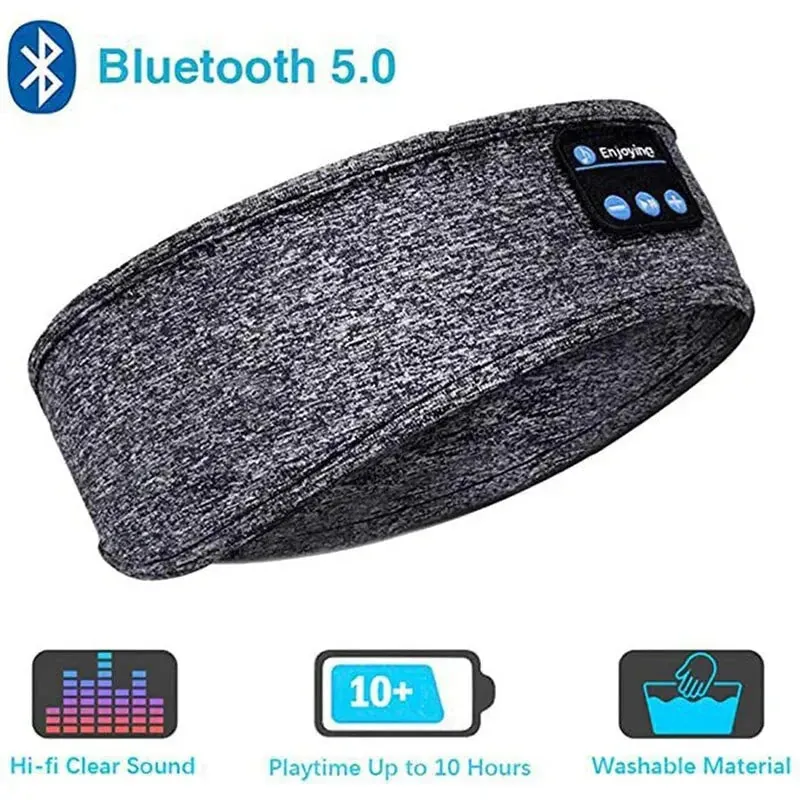
You can also compare it with the wider Sound & Sleep collection, then read the Bluetooth Sleep Headphones Headband Buying Guide for a closer look at fit, speaker placement, charging, and care. For order and shipping questions, the frequently asked questions cover the essentials.
Frequently asked questions
What type of headphones are most comfortable for side sleepers?
A soft sleep headband is often the most comfortable format for side sleepers because it avoids placing a hard earbud or headband between the ear and pillow. The best choice still depends on your pillow, how much you move, and whether you want personal audio or stronger isolation from room noise.
Can side sleepers use earbuds for sleep?
Some side sleepers can use very small earbuds, but fit matters more than usual because the pillow can press the earbud into the ear. If you try them, look for a low-profile shape, keep sessions comfortable and low in volume, and stop if you notice pressure, soreness, or irritation.
Are over-ear headphones good for sleeping on your side?
Over-ear headphones are rarely a comfortable choice for side sleeping because the ear cup and headband create bulk against the pillow. They can work for reclining or daytime listening, but a soft headband or a low-profile earbud is usually easier to use in bed.
Do sleep headphones block snoring or outside noise?
Most fabric sleep headbands do not block or cancel room noise. They are designed for comfortable personal audio at a low level. If outside noise is the main problem, consider the room environment as well as the audio device.